

Brown wool

How to Craft / Obtain


Ingredients:
-
minecraft:brown_dye
-
minecraft:white_wool
-
minecraft:orange_wool
-
minecraft:magenta_wool
-
minecraft:light_blue_wool
-
minecraft:yellow_wool
-
minecraft:lime_wool
-
minecraft:pink_wool
-
minecraft:gray_wool
-
 minecraft:light_gray_wool
-
 minecraft:cyan_wool
-
 minecraft:purple_wool
-
 minecraft:blue_wool
-
 minecraft:green_wool
-
 minecraft:red_wool
-
 minecraft:black_wool
Yield: 1
Uses for this Item (Recipes Including This)
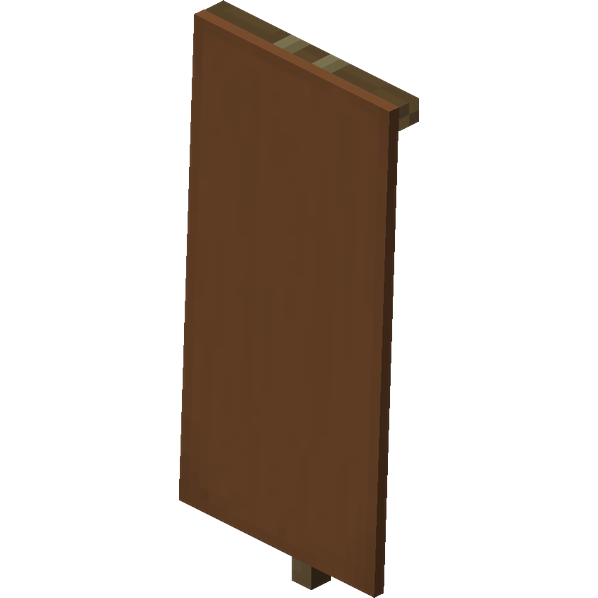
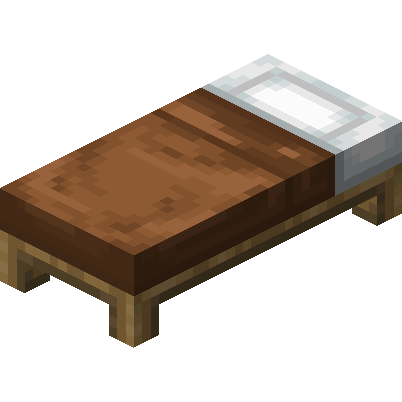


About
Brown wool is a versatile decorative and functional block obtained from sheep or through crafting, serving as one of the sixteen distinct color variants available in Minecraft. Unlike stained glass and terracotta, the white variant serves as the undyed base, but wool of any color can be freely re-dyed into brown using appropriate dyes.
Brown wool can be obtained by shearing adult sheep, which yields one to three blocks, or by defeating unsheared adult sheep. Sheep naturally spawn with brown wool most commonly in warm biomes, though they can appear across various biomes alongside other natural colors. Players can also obtain wool as a random drop from shepherd villagers under the Hero of the Village effect.
As a block, brown wool is easily mined, highly flammable, and offers minimal resistance against explosions. It functions as a crafting ingredient for paintings without altering their appearance and can be utilized as a furnace fuel in Java Edition, smelting half an item per block. Its unique mechanical property lies in vibration occlusion, allowing it to block vibrations and sounds from reaching sculk sensors, sculk shriekers, and allays.
Brown wool has low structural durability and cannot be effectively used as a blast-resistant barrier or permanent defensive armor. It occupies a standard inventory slot stackable up to sixty-four items, acting purely as a building, crafting, and redstone-adjacent utility block rather than wearable equipment.
In survival strategy and multiplayer setups, brown wool is invaluable for stealth mechanics, redstone soundproofing, and mob farm isolation against warden detection. Its natural generation in specific structures and renewable source through sheep breeding make it accessible for automated farming and acoustic engineering in base designs.