
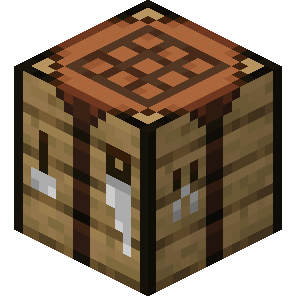

How to Craft / Obtain
Uses for this Item (Recipes Including This)
This item is not used as an ingredient in any known crafting recipes.
About
Orange concrete is a striking and vibrant building block in Minecraft that is created whenever orange concrete powder comes into direct contact with water. This block is part of the extensive family of sixteen distinct dye colors available to players, offering a bold and solid aesthetic that makes it exceptionally useful for architectural and decorative projects. Because concrete blocks boast more pronounced and saturated colors than stained terracotta and are completely non-flammable unlike wool, builders frequently choose them to add clean, striking lines and vivid coloration to their structures.
Obtaining concrete requires a proper pickaxe to be successfully mined, as attempting to harvest it without the correct tool will result in the block dropping nothing at all. The formation process occurs dynamically in the game world whenever concrete powder touches a water source block, flowing water, or a waterlogged block in Java Edition. When placed next to a waterlogged block, the powder must be positioned adjacent to the open sides where water can flow outward, such as the open lateral faces of stairs, rather than the obstructed back side or any side of waterlogged leaves.
As a building material, orange concrete possesses a structural hardness that is slightly higher than standard stone, though its blast resistance is significantly lower, meaning it is less durable against explosions in survival mode. Although the block itself cannot be found naturally generated in standard biomes, its red and white counterparts do appear in trial chambers as part of various decorative murals within an atrium. The crafting ingredients required to produce concrete powder are entirely renewable, making the finished concrete technically renewable as well, even though obtaining sand in large quantities remains challenging outside of infrequent wandering trader exchanges.
In real-world construction, a one-cubic-meter block of concrete is practically indestructible and extremely resistant to explosions, whereas Minecraft concrete is balanced with a notably lower blast resistance for gameplay purposes. Despite this mechanical vulnerability, players deeply value the entire concrete block family for its matte texture and lack of distracting patterns, which allows for smooth, uniform surfaces in modern builds, pixel art, and large-scale city projects. Black concrete in particular holds the distinction of being considered the darkest solid block in the entire game, complementing bright variants like orange concrete for stark, high-contrast designs.
The history of concrete spans multiple editions of Minecraft, having been introduced as a major decorative addition to give builders more solid color options alongside terracotta and wool. Issues and bugs relating to concrete blocks and their interaction mechanics with water and gravity are actively maintained on the official Minecraft bug tracker by the community and developers. Through updates across Java and Bedrock editions, concrete has remained a foundational material for creative and survival builders alike, prized for its ability to hold a vivid, unfading hue across any architectural creation.