
How to Craft / Obtain

Uses for this Item (Recipes Including This)
This item is not used as an ingredient in any known crafting recipes.
About
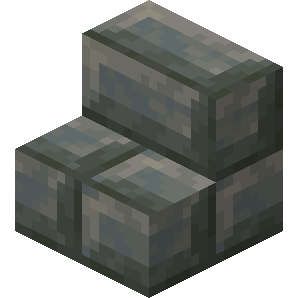
Tuff brick stairs represent a specialized decorative block variant meticulously crafted from standard tuff bricks within the broader family of stone-based building materials. As an artificial variant that does not generate naturally anywhere in the world terrain, players must actively manufacture or process them to incorporate them into architectural builds. Their primary purpose is to provide builders with angled, stepped transitions that match the distinct texture, coloration, and aesthetic properties of tuff bricks. This makes them exceptionally useful for constructing detailed roofs, staircases, multi-tiered platforms, and intricate masonry detailing across various architectural styles.
Regarding the physical acquisition and mining mechanics of tuff brick stairs, they can be efficiently harvested using any tier of pickaxe, ranging from basic wooden tools up to netherite implements. When broken with an appropriate pickaxe, the block drops itself intact, allowing it to be recovered and relocated to a new position. However, if a player attempts to mine tuff brick stairs without using a pickaxe, the block breaks down completely without dropping any items at all, resulting in total loss of the material unless harvested correctly. This strict harvesting rule aligns with standard stone and brick mechanics throughout the game, encouraging proper tool usage during construction and deconstruction phases.
Although the reference text notes that direct crafting and stonecutting recipe inputs are currently unlisted or subject to game updates, stone-based stairs in Minecraft are fundamentally tied to stonecutter processing or standard crafting table shaping. In practical gameplay, variant stairs of this nature are typically produced by placing full tuff brick blocks into a stonecutter to yield the corresponding stair pieces at a one-to-one ratio, or by arranging blocks in a stair pattern on a crafting grid. This flexibility ensures that builders can easily convert bulk tuff brick resources into smooth, angled architectural components as needed during large-scale construction projects, maintaining consistent texture fidelity across all built structures.
As decorative components, tuff brick stairs inherit all the standard physical and visual behaviors associated with stone stair blocks in both Java and Bedrock editions. They support directional placement, allowing builders to orient them right-side up, upside-down, or in corner configurations to form smooth inner and outer angles for complex architectural designs. Their solid block faces emit standard stone-breaking sounds when interacted with, and they interact predictably with redstone components, lighting, and mob spawning rules just like any other standard decorative stone variant block in the game environment.
The introduction of tuff brick stairs alongside other tuff variant blocks greatly expanded the creative palette available to builders who favor deepslate-themed and subterranean architectural palettes. Because tuff blocks bridge the visual gap between smooth stone and dark deepslate materials, tuff brick stairs allow for sophisticated depth, shadowing, and textural contrast in stone structures. Whether used to accent castle ramparts, frame underground fortresses, or build rugged medieval pathways, these stairs offer builders a reliable, durable, and aesthetically cohesive option for adding fine geometric detail to their constructions.