

Red bed

How to Craft / Obtain

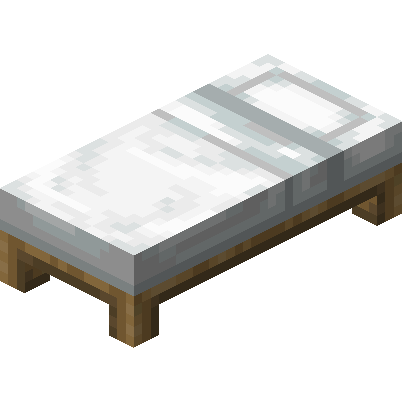
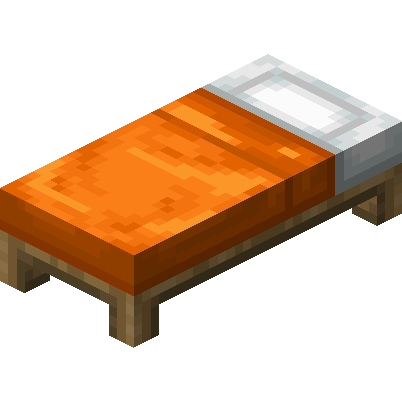
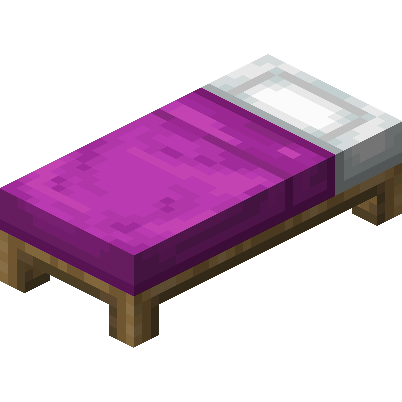
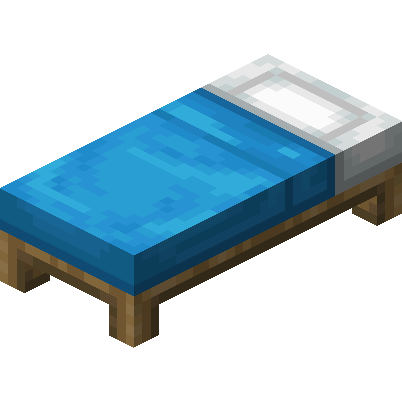

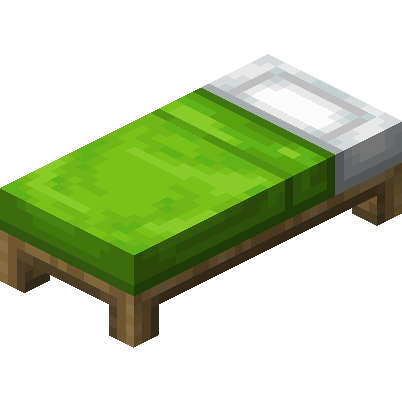
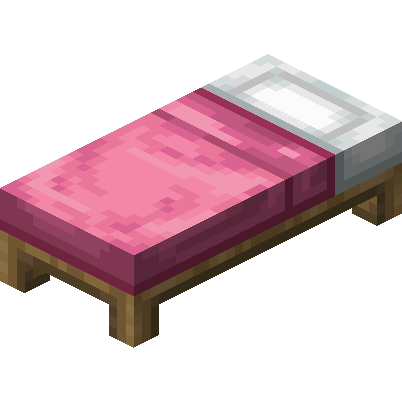

Ingredients:
-
minecraft:red_dye
-
minecraft:white_bed
-
minecraft:orange_bed
-
minecraft:magenta_bed
-
minecraft:light_blue_bed
-
minecraft:yellow_bed
-
minecraft:lime_bed
-
minecraft:pink_bed
-
minecraft:gray_bed
-
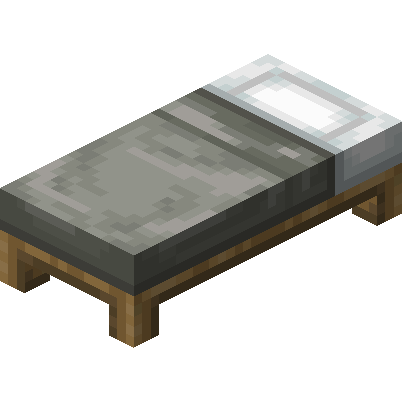 minecraft:light_gray_bed
-
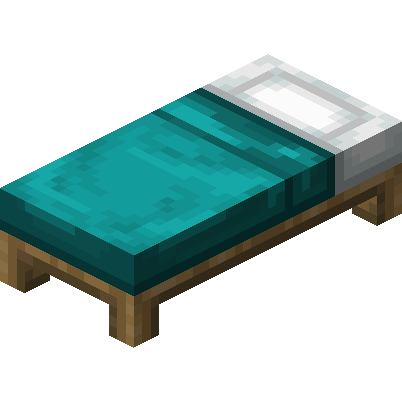 minecraft:cyan_bed
-
 minecraft:purple_bed
-
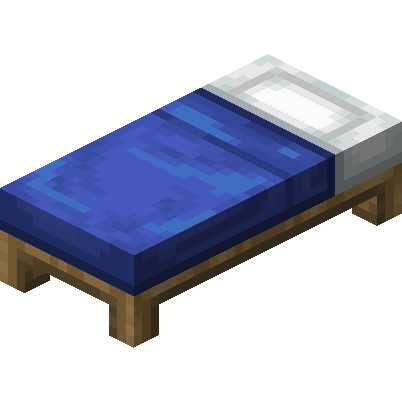 minecraft:blue_bed
-
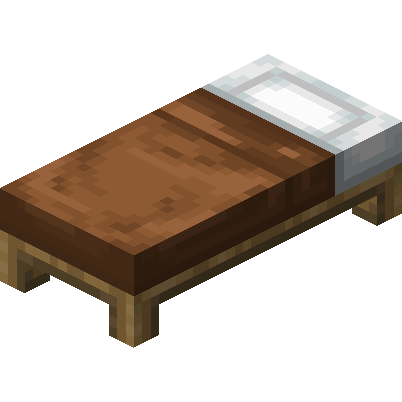 minecraft:brown_bed
-
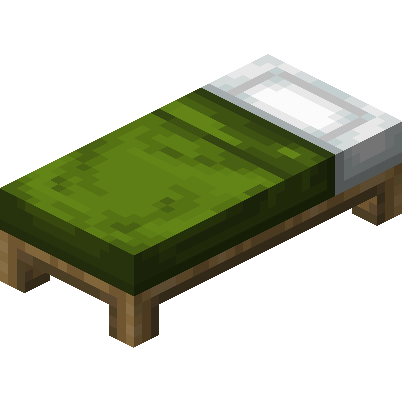 minecraft:green_bed
-
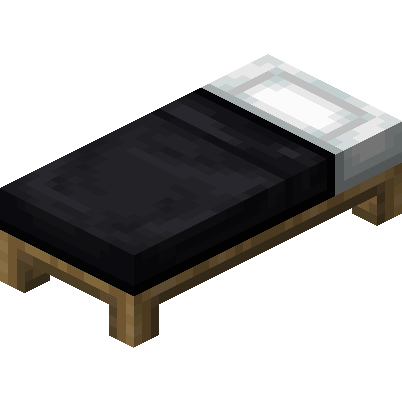 minecraft:black_bed
Yield: 1


Uses for this Item (Recipes Including This)
About
A bed is a dyeable utility block that allows a player in the Overworld to sleep through the night and change their spawn point to within a few blocks of the bed, as long as it is not broken or obstructed. Villagers sleep in beds at night and require spare beds to produce offspring. No tool can accelerate the breaking process of a bed, and a bed drops itself when it is destroyed. Red beds naturally generate in each igloo, while other structures such as villages and trial chambers feature beds of various colors depending on the specific biome or room layout. Beds require two blocks of floor space for placement, where the foot of the bed occupies the selected block and the head of the bed extends farther away from the player.
Sleeping in a bed requires the internal sky light to be 11 or below, which occurs during specific tick ranges in clear or rainy weather, or at any time during thunderstorms. Attempting to use a bed at any other time results in an error message, and sleeping is exclusively possible in the Overworld, since attempting to sleep in the Nether, the End, or custom disabled dimensions causes the bed to explode with power 5 and ignite surrounding blocks and the player. Furthermore, players cannot sleep if monsters are within a certain horizontal and vertical distance, if they have not rested for three in-game days and phantoms spawn, if they are taking ongoing damage, or if the bed is occupied by another player. Successfully sleeping for 101 in-game ticks skips the time to sunrise and resets the weather cycle to clear conditions.
Once a player enters a bed or right-clicks it during the daytime, their spawn point is successfully set to that bed location, and a chat message confirms the change. When a player dies or respawns later, the game checks the immediate blocks surrounding the head of the bed, evaluating potential positions in a clockwise or counterclockwise pattern to find an unobstructed space with adequate headroom and a solid block underneath. If all adjacent blocks are obstructed, the player receives an obstruction message and respawns at the world spawn point instead. Interacting with the bed again updates the saved spawn side corresponding to the direction the player was facing, and reorienting or replacing the bed in the same exact location preserves the stored respawn point.
Falling onto a bed bounces any living entity with 75 percent of the impact velocity and reduces fall damage by setting the fall distance to 50 percent of the actual distance fallen. Baby villagers also bounce on beds during the day, and players can bounce on a bed while another entity is sleeping without waking them. Additionally, each bed in the vicinity of a zombie villager provides a chance to speed up the conversion and curing process, acting similarly to iron bars in a prison cell setup. Because beds explode when used in the Nether or the End, they can be utilized as inexpensive and instantaneous demolition tools for tasks such as mining ancient debris or fighting the ender dragon.
Beds are instantly destroyed when a piston attempts to push them, and they cannot be pulled by sticky pistons. Each bed has a block entity associated with it that stores additional data about the block, and block states differentiate between the head and foot parts of the bed as well as its color and occupancy status. The red bed specifically originated as the default bed color before being changed to white in later Java and Pocket Edition versions. While villagers can sleep safely in any dimension without triggering an explosion, players and villagers positioned in beds are protected from drowning or lava damage, though any premature destruction of the bed while sleeping interrupts the rest cycle and prevents the night from passing.