
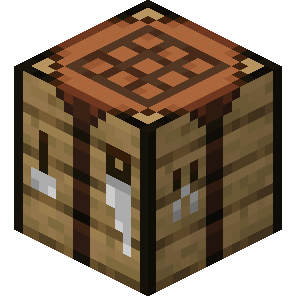
How to Craft / Obtain

Ingredients:
Yield: 4
Uses for this Item (Recipes Including This)



















About
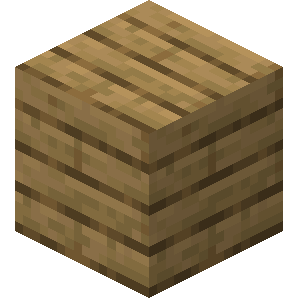
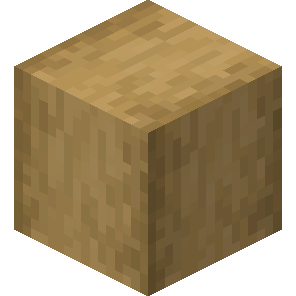
Planks are among the most essential and fundamental building blocks in Minecraft, serving as the cornerstone for both architectural construction and intricate crafting progression. Players typically craft them as one of their very first milestones upon entering Survival mode, breaking down raw tree logs into versatile wooden materials that facilitate early tool creation, shelter building, and inventory management. The game features thirteen distinct variants of planks, categorized into Overworld planks derived from traditional tree logs, bamboo planks produced from blocks of bamboo, and nonflammable Nether planks harvested from huge fungus stems found within the Nether dimension.
Obtaining planks is an accessible process that can be accomplished by hand, although utilizing an axe significantly accelerates the breaking time and efficiency. While many variants are acquired exclusively through crafting or natural structures, oak planks generate naturally across a wide variety of generated game structures. They form structural support beams in abandoned mineshafts supported by oak fences, serve as comprehensive wall, roof, and floor materials in plains villages including functional paths over water, and make up the distinctive flooring and pillars within stronghold libraries and storage rooms, alongside woodland mansions, shipwrecks, and abandoned camps.
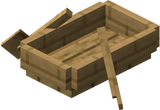
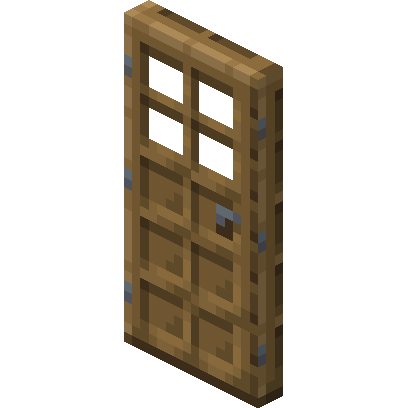
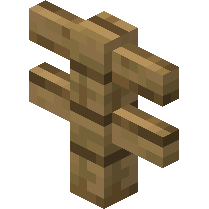
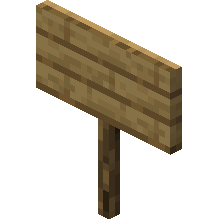
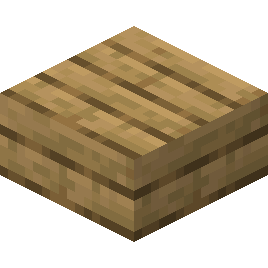
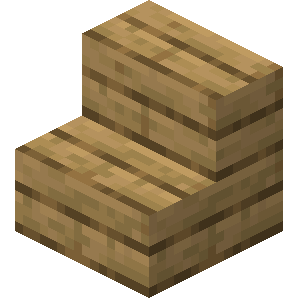
The utility of oak planks extends far beyond basic construction, functioning as essential crafting ingredients and reliable furnace fuel. Players utilize planks to manufacture stairs, slabs, fences, fence gates, doors, trapdoors, pressure plates, buttons, signs, and boats, where items like stairs and doors require planks of the exact same type while other recipes allow mixing different wood types freely. As a fuel source in furnaces, Overworld planks successfully smelt 1.5 items per block, though variant Nether planks cannot be burned directly as fuel. Furthermore, oak planks serve as the standard repair item for the entire wood tier, enabling players to restore wooden swords, pickaxes, axes, shovels, hoes, spears, and shields on an anvil.
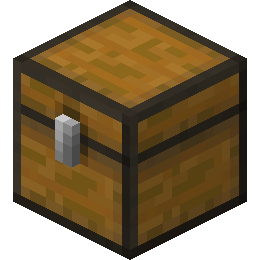
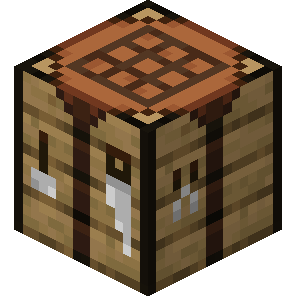
The combinatorial flexibility of wooden planks across crafting recipes introduces incredible depth to the game mechanics. Because various wooden plank variants can be used interchangeably in numerous recipes, players encounter staggering mathematical possibilities, including 28,561 unique ways to craft a crafting table, 4.8 million ways to craft a shield, 816 million ways to craft a chest, jukebox, or note block, and an astonishing 10.6 billion ways to craft a chiseled bookshelf. Crafting every single unique recipe once requires a meticulously calculated number of planks, highlighting their profound mathematical and functional significance in the game economy.
Historically and structurally, planks have remained an enduring element of Minecraft's design since its earliest development phases, bridging the gap between raw wilderness gathering and advanced base building. Their presence in diverse biomes and structures, from swamp huts and taiga villages to pillager outposts and ancient cities, ensures that wood remains a ubiquitous resource for players exploring the world. Whether used to construct elaborate multi-story fortresses, craft intricate redstone contraptions, or repair foundational wooden gear during early game survival, oak planks and their diverse family members embody the core creative and survival ethos of the Minecraft experience.